

Dental implant tooth replacement is a long-lasting way to replace one or more missing teeth. This article is for anyone thinking about implants who wants a clear, practical overview. You’ll learn the main benefits, who makes a good candidate, what the procedure involves, common risks, cost factors, and next steps to take.
What Is Dental Implant Tooth Replacement?
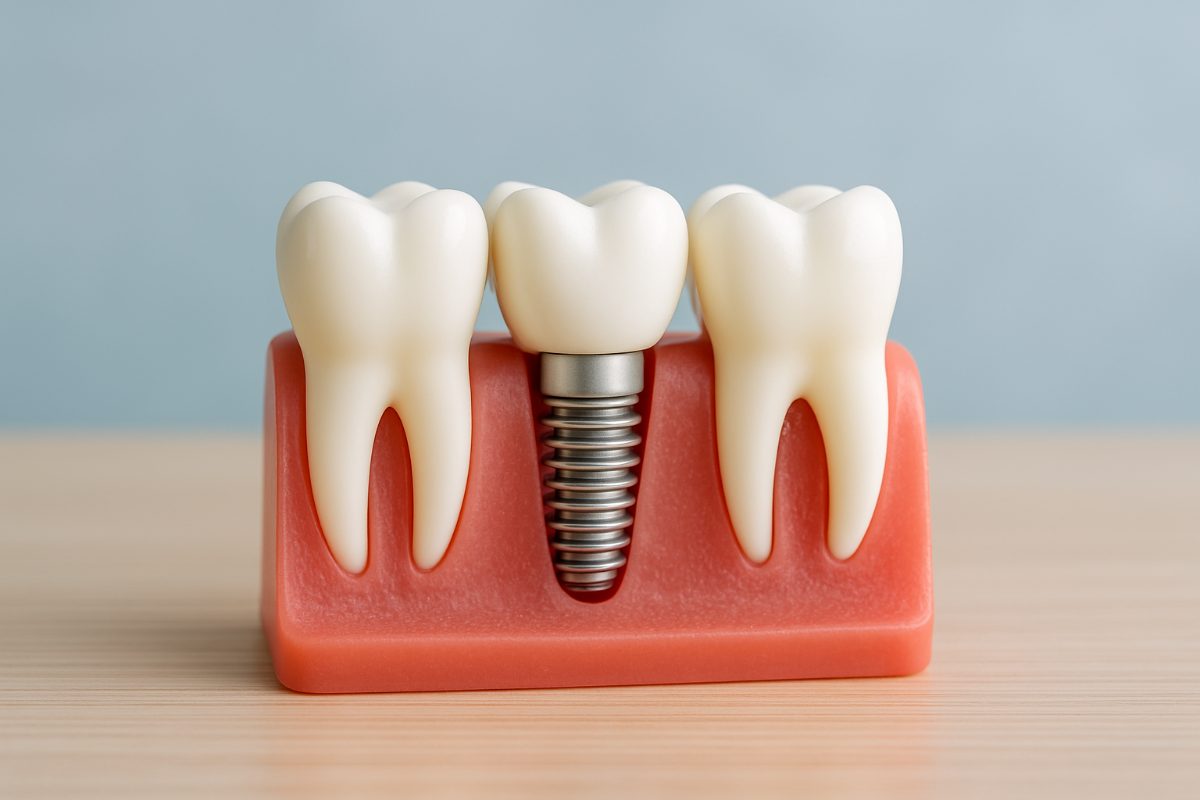
A dental implant tooth replacement uses a small titanium screw placed into the jawbone to act like a tooth root. Once the implant integrates with bone, it supports a crown, bridge, or denture. Unlike removable dentures or traditional bridges, implants are fixed and do not rely on nearby teeth for support. They are designed as a long-term solution that looks and feels closer to a natural tooth.
Key Benefits Of Dental Implant Tooth Replacement
Restored chewing and speech
Implants give a stable base for chewing, making it easier to eat a wide range of foods. Because they don’t shift like dentures, implants also help with clearer speech and less clicking or slipping while talking or eating.
Bone preservation and facial support
When a tooth is lost, the jawbone below can shrink over time. An implant stimulates the bone much like a natural root, which helps preserve jawbone volume and keeps your facial shape more natural.
Durability and appearance
Implants are made to last many years with proper care. The crowns are matched to your teeth for a natural look, often improving confidence and smile function more than removable options.
Who Is A Good Candidate?
Good candidates are generally healthy, have adequate jawbone or are willing to have bone grafting, and have healthy gums. Non-smokers or those able to quit have better outcomes. People with uncontrolled conditions like certain cancers or uncontrolled diabetes may need special evaluation. If implants aren’t right, bridges or dentures can be considered.
What To Expect During The Treatment
Consultation and planning
Your provider will do an exam, take 3D imaging, and make a treatment plan. This step sets the timeline, costs, and whether extra procedures (like grafts) are needed.
Surgical placement
The implant is placed under local anesthesia or sedation. Most patients feel only mild discomfort afterward. Post-op care includes short rest, ice, and a soft-food diet for a few days.
Restoration and follow-up
After healing (often several months), an abutment and crown are attached. You’ll have follow-up visits to check healing and make sure the implant functions well.
Risks, Recovery, And Aftercare
Common effects include swelling, bruising, and mild pain. Watch for signs of infection, unusual pain, or implant movement. Good oral hygiene, quitting smoking, and regular dental visits reduce risks. Contact the office if you have fever, severe pain, or persistent drainage.
Cost, Insurance, And Financing Considerations
Costs vary by number of implants, need for grafting, materials, and provider experience. Insurance may cover part of the crown or exams but often limits implant coverage. Many practices offer payment plans, third-party financing, or phased treatment to spread costs.
Advanced Care & Technology That Improves Outcomes
Modern tools boost accuracy and comfort: CT/3D imaging, digital treatment planning and scanners, soft-tissue lasers, conscious or IV sedation, and 24-hour post-op support.
About Dr. Eric M. George (Light Practice Note)
Dr. Eric M. George, DMD, DABOI, DICOI, MAGD, FAAID, FMIII, FAADS, FICD, is a board-certified implant surgeon and general dentist with international diplomates and a Mastership. He blends evidence-based care with advanced technology and has lectured internationally on implant care.
Is Dental Implant Tooth Replacement Right For You?
Decision checklist: healthy enough for minor surgery, adequate bone or willing to graft, non-smoker or ready to quit, realistic timeline and budget. Next steps: schedule a consultation, get 3D imaging, and ask about sedation and digital planning. To learn more or book an evaluation, contact the office for a consult.