

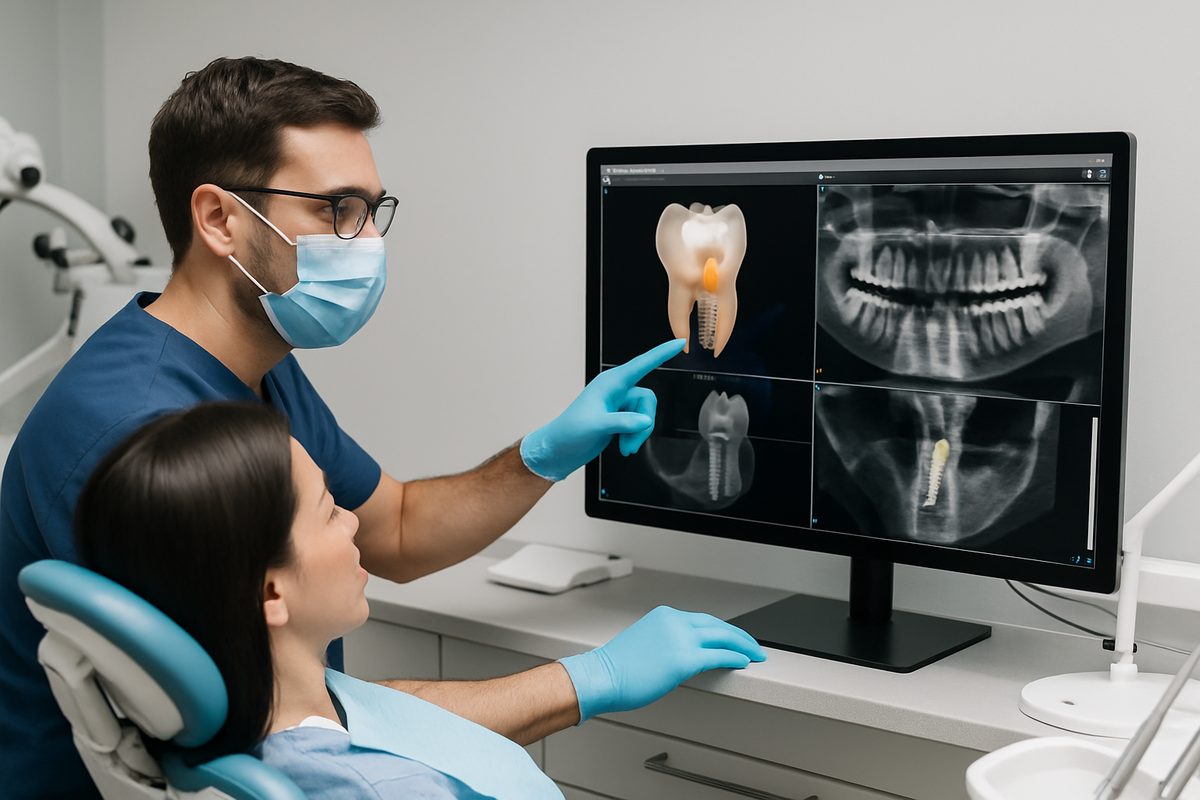
Your Premier Dental Implant Service: Are Implants Right For You? A dental implant service replaces missing teeth with titanium implants, abutments, and crowns to restore chewing, appearance, and jaw health. People who have lost one or more teeth, wear dentures, or have trouble chewing often consider implants. This post explains what a dental implant service includes, who makes a good candidate, the step-by-step process, advanced tech used, costs and financing, and how to prepare for a consultation.
What Is a Dental Implant Service?
A dental implant service places a titanium implant into the jaw to act as a tooth root, adds an abutment to connect, and attaches a crown or prosthesis. Unlike bridges or dentures, implants fuse with bone for long-term stability. Common goals are to restore chewing, improve appearance, prevent bone loss, and stabilize adjacent teeth.
Who Is a Good Candidate for a Dental Implant Service?
Missing one or more teeth
Single-tooth implants are often the best option when one tooth is missing, preserving nearby teeth. Multiple implants can support bridges or full-arch prosthetics when several teeth are gone. Compared with removable dentures, implants feel and function more like natural teeth.
Bone health and overall medical considerations
Adequate bone volume and healthy gums improve success rates. Conditions like uncontrolled diabetes, recent radiation, or heavy smoking can affect candidacy. A consultation with imaging determines bone levels. If bone is low, bone grafting or sinus lifts can prepare the site.
How to Know If a Dental Implant Service Is Right for You
Look for signs like loose teeth, difficulty chewing, or chronic denture irritation. If you avoid certain foods or feel self-conscious about gaps, implants may help. At a consultation ask about success rates, alternatives (bridges/dentures), recovery time, and long-term maintenance. Bring a list of medications and medical history.
The Dental Implant Process: Step-by-Step
Initial consultation and 3D imaging
First visit includes exam, medical review, and 3D imaging to assess bone and anatomy. Imaging guides whether grafting or sinus work is needed and helps plan implant size and position.
Digital treatment planning and the surgery
Digital planning produces a precise surgical guide. On surgery day the implant is placed in the bone—this can be one implant or multiple. Many procedures use local anesthesia with optional sedation.
Restoration and recovery
Healing can take weeks to months as bone integrates with the implant. After integration the abutment and final crown or bridge are placed. Follow-up visits confirm healing; maintain good oral hygiene and regular dental visits.
Advanced Technologies That Improve Your Dental Implant Service
CT scanners / 3D imaging
CT scans give 3D views of bone and nerves for safer, more accurate placement.
Digital scanners and treatment planning
Intraoral scanners replace putty impressions, sending instant files to labs for more predictable results.
Soft-tissue lasers
Lasers reduce bleeding, pain, and speed healing during gum procedures.
Sedation options
Options include conscious sedation and IV sedation for comfort; safety protocols and monitoring are standard.
24-hour call system & same-day support
Access to real-person support and same-day appointments reduces worry and speeds care when issues arise.
Costs, Insurance, and Financing for a Dental Implant Service
Costs vary by number of implants, bone grafting, and type of restoration. Insurance may cover some restorative work but often not the implant itself. Many practices offer financing plans, third-party loans, or in-house payment options to spread costs.
Why Choose Our Dental Implant Service?
Dr. Eric M. George DMD, DABOI, DICOI, MAGD is a board-certified implant surgeon and general dentist with advanced diplomates and mastership training. His experience and evidence-based approach improve outcomes, safety, and predictable results for complex implant care.
Questions to Ask and Next Steps
Ask about success rates, treatment timeline, imaging used, sedation options, and total costs. Bring recent X-rays, list of meds, and medical history. To learn if a dental implant service is right for you, request a consultation or call our office to schedule an evaluation.