

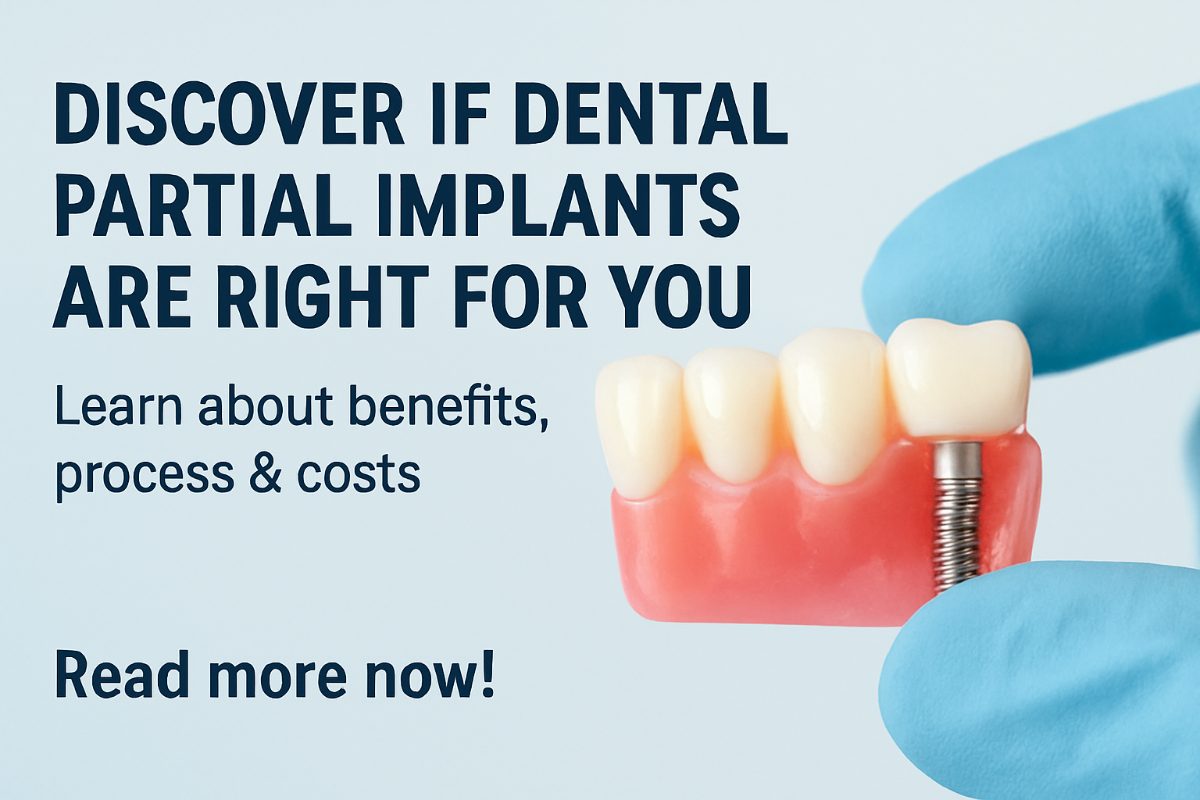
Are dental partial implants right for you? Dental partial implants are small dental implants used to replace one or a few missing teeth without replacing a whole arch. This short guide is for adults who miss one or several teeth and want a stable, long-term option. Read on to learn what dental partial implants are, who makes a good candidate, the treatment steps, risks, costs, alternatives, and common patient questions.
What Are Dental Partial Implants?
Dental partial implants are implants placed to support single crowns, small bridges, or partial denture frameworks. They differ from full-arch implants, which replace all teeth, and from removable partial dentures, which clip onto remaining teeth. Partials use one or more implants to anchor restorations for improved stability.
Types of partial implant solutions
Implant-supported crowns replace a single tooth with an implant and crown. Implant-retained partials use implants as attachment points for a removable partial, improving fit and comfort. Small fixed bridges use two or more implants to support a non-removable bridge for adjacent missing teeth.
Who Is a Good Candidate for Dental Partial Implants?
Ideal candidates have one or several missing teeth, good oral hygiene, and enough jawbone to hold an implant. Non-smokers or people willing to quit, and those with well-controlled medical conditions, usually do well. Good dental health and realistic expectations also help outcomes.
When implants may not be right
Implants may not be recommended for people with uncontrolled diabetes, active severe gum disease, heavy smoking habits, or very thin bone where grafting is not an option. Your dentist will evaluate medical history and oral health before recommending treatment.
Benefits of Choosing Dental Partial Implants
Partial implants restore chewing and speech better than removable partials. They help preserve bone where teeth are missing, feel more natural, and often last longer with proper care. Many patients report higher comfort, confidence, and fewer adjustments than with removable options.
What to Expect: The Dental Partial Implant Process
Consultation & planning
A consultation uses 3D imaging and advanced digital treatment planning to assess bone, nerves, and exact implant placement. This creates a clear plan and timeline tailored to your mouth.
Surgery & restoration
Implant surgery is typically outpatient. Healing (osseointegration) takes weeks to months, then the final crown, bridge, or partial is attached. Sedation options include conscious sedation or IV sedation. Digital scanners can make impressions faster and more comfortable.
Risks, Recovery, and Aftercare
Common risks include infection, minor swelling, and rare implant failure. Pain is usually managed with over-the-counter or prescription meds. Healing often takes a few weeks for soft tissue and a few months for full bone integration. Good oral hygiene and regular follow-ups are crucial.
Cost, Insurance, and Financing
Costs vary by number of implants, need for bone grafting, and materials used. Many dental plans limit implant coverage. Financing plans, dental loans, and in-office payment options can help spread costs.
Alternatives to Dental Partial Implants
Removable partial dentures are less expensive but less stable. Traditional bridges don’t require implants but may affect adjacent teeth. Full-arch implants replace entire rows of teeth when many are missing. Each has trade-offs in cost, longevity, and function.
Common Patient Questions (FAQs)
Do dental partial implants hurt? Most patients have mild to moderate discomfort that improves in a few days. How long do they last? With good care, implants can last decades. How soon can I eat normally? Soft foods within days; full chewing after healing (weeks to months). Will insurance cover it? Coverage varies; many plans offer limited implant benefits.
About Dr. Eric M. George, DMD
Dr. Eric M. George is a board-certified implant surgeon and general dentist with Diplomates in oral implantology and a Mastership in general dentistry. His practice uses CT-scanners, advanced digital treatment planning, soft-tissue lasers, sedation options (conscious and IV), digital scanners, and 24-hour call support to provide safe, efficient care.
Next Steps / Call to Action
If you’re considering dental partial implants, schedule a consult. Bring medical history and recent X-rays if available. Same-day bookings and virtual consults may be available to get you started quickly.