

This step‑by‑step guide explains how dental implants (also called tooth implants) are done, why the sequence matters, and what modern, evidence‑based care looks like. You’ll learn the parts of an implant, the typical treatment steps from consultation to crown, who makes a good candidate, risks and recovery, cost and timing, and clear next steps to book a personalized plan for dental implants in Coventry, RI.
What Are Dental Implants? A Simple Explanation (dental implants in Coventry, RI)
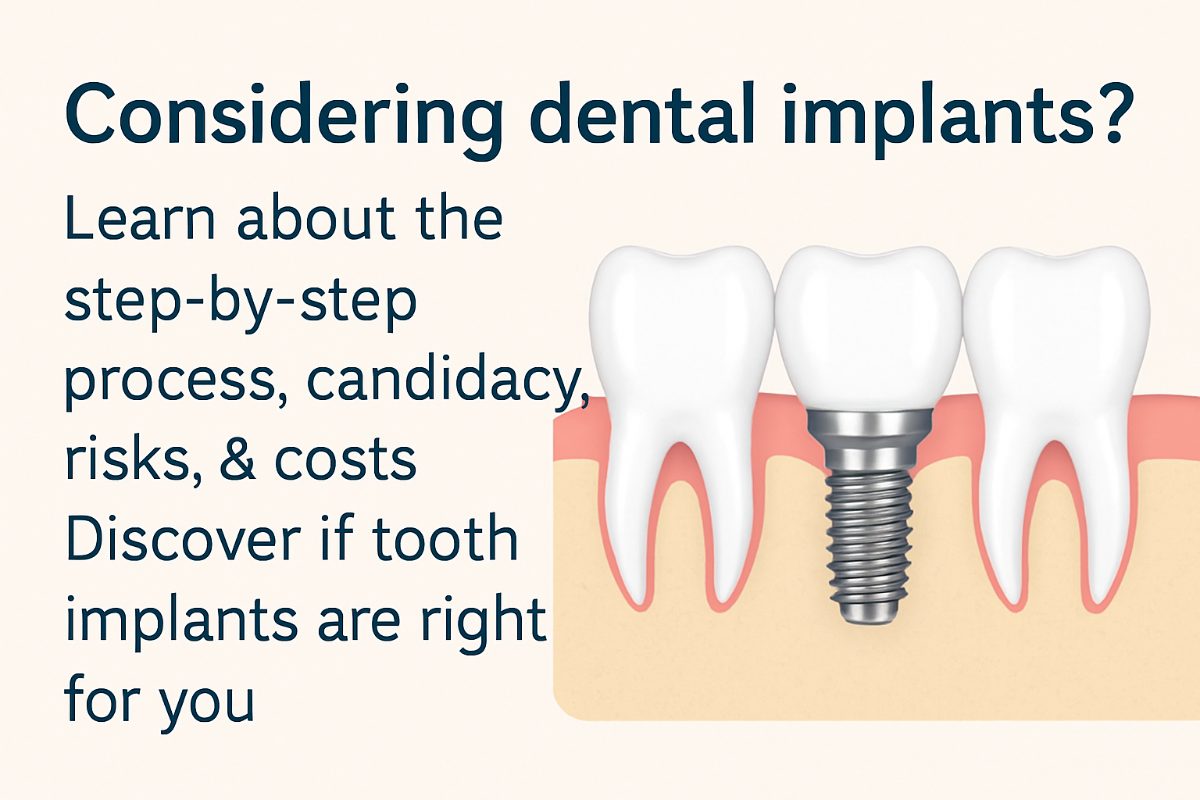
Dental implants are small titanium posts placed into the jaw to replace a missing tooth root. A tooth implant supports a connector piece called an abutment and a crown or bridge that looks and works like a natural tooth. Because an implant replaces the root and the visible tooth, it keeps bone healthy and gives stronger chewing and a more natural feel than dentures or some bridges.
In plain terms: the implant is the metal screw, the abutment is the connector, and the crown is the tooth you see. Many people choose dental implants in Coventry, RI when they want a long‑term option that looks, feels, and functions like a real tooth.
Step‑By‑Step: How Dental Implants Are Done
1) Initial consultation and planning
Your dentist reviews your medical history, checks your mouth, and discusses goals. Advanced imaging, like a 3D CT scan and digital intraoral scans, maps your jaw and nerves. This digital plan helps place implants precisely and reduces surprises. Planning also covers sedation options and an estimated cost and timeline for dental implants in Coventry, RI.
2) Preparatory treatments
Some people need tooth extractions, bone grafts, or a sinus lift before implants. Healthy gums and controlled medical conditions (for example, well‑managed diabetes) improve success. Smoking and certain medications can increase risk and may require extra steps before tooth implants are placed.
3) Implant placement surgery
Implant placement surgery is usually an outpatient procedure. Options include local anesthesia, conscious sedation, or IV sedation depending on comfort needs. Many practices use guided surgery based on the digital plan so implants go exactly where intended. During the procedure you’ll feel pressure but little pain; most patients tolerate it well with proper sedation and local numbing.
4) Healing and osseointegration
After placement, the implant needs time to fuse with bone — this is called osseointegration. Healing usually takes a few months. You may have a temporary crown or denture during this time so you can eat and smile while the implant bonds with bone.
5) Abutment and final crown/bridge
Once healed, the abutment is attached and a final crown, bridge, or full‑arch prosthesis is made. Digital impressions often replace putty impressions, enabling more accurate fits and sometimes same‑day workflows. The final restoration is secured and adjusted for bite and comfort.
6) Follow‑up and long‑term care
Regular dental checkups, daily brushing, and flossing around the implant keep it healthy. Your dentist will monitor bone levels and soft tissue. If you grind your teeth or have other risk factors, they may recommend a nightguard or other protections to extend the life of your implant.
Who Is A Good Candidate For Dental Implants In Coventry, RI
Good candidates typically have:
- Good general health and controlled chronic conditions
- Adequate jawbone or willingness to have bone grafting
- Healthy gums free of active gum disease
Certain factors don’t automatically rule someone out. Advanced imaging and planning often allow dental implants in Coventry, RI for people with jawbone loss, previous dental infections, or complex anatomy after careful preparation.
Risks, Recovery, And What To Expect After Tooth Implants
Normal short‑term effects include swelling, mild bleeding, and soreness for a few days. Most pain is controlled with over‑the‑counter or prescribed meds. Healing timelines vary but many patients return to normal activities within a few days and follow dietary limits while implants integrate.
Possible complications are infection, nerve irritation, sinus issues (upper jaw), or implant failure. Signs to call your dentist include increasing pain, fever, uncontrolled swelling, or loose components. To aid healing: follow soft‑food instructions, avoid smoking, keep the area clean, and attend follow‑up visits.
Cost, Timeline, And Financing Options For Dental Implants In Coventry, RI
Cost depends on scope: a single implant and crown is less than multiple implants or a full‑arch restoration. Preparatory work (extractions, bone grafts, CT scans) adds to cost. Typical timeline ranges from a few months (single implant with straightforward healing) to several months for grafting plus integration for more complex cases.
Many patients use a mix of dental insurance, health savings accounts, third‑party financing, or in‑office payment plans. Ask about what each phase covers, estimated out‑of‑pocket costs, and financing options during your consultation for dental implants in Coventry, RI.
Why Choose A Board‑Certified Implant Surgeon Near Coventry, RI
Choosing a board‑certified implant surgeon improves predictability and safety. Dr. Eric M. George, DMD, DABOI, DICOI, MAGD (board‑certified and highly credentialed) provides advanced, evidence‑based care. His training and experience support complex planning and treatment decisions.
Advanced technology—CT scanning, digital treatment planning, intraoral scanners, soft‑tissue lasers, guided surgery, and sedation options—helps reduce visits, improve comfort, and increase success rates. Ask these questions at your consult:
- Are you board‑certified and how many implant cases do you place yearly?
- Will you use 3D imaging and guided planning for my case?
- What sedation options and 24‑hour support do you offer?
- What is the full estimated cost and timeline, including possible grafts?
Next Steps: Ready To Learn If Dental Implants Are Right For You?
If you’re considering dental implants in Coventry, RI, book a consultation to get a personalized plan. Bring a list of medications, your medical history, and any dental x‑rays if you have them. A consult will cover imaging needs, costs, timeline, and sedation options. Call the office or request a consult online to start the process and get answers to your questions about tooth implants and your best treatment path.