

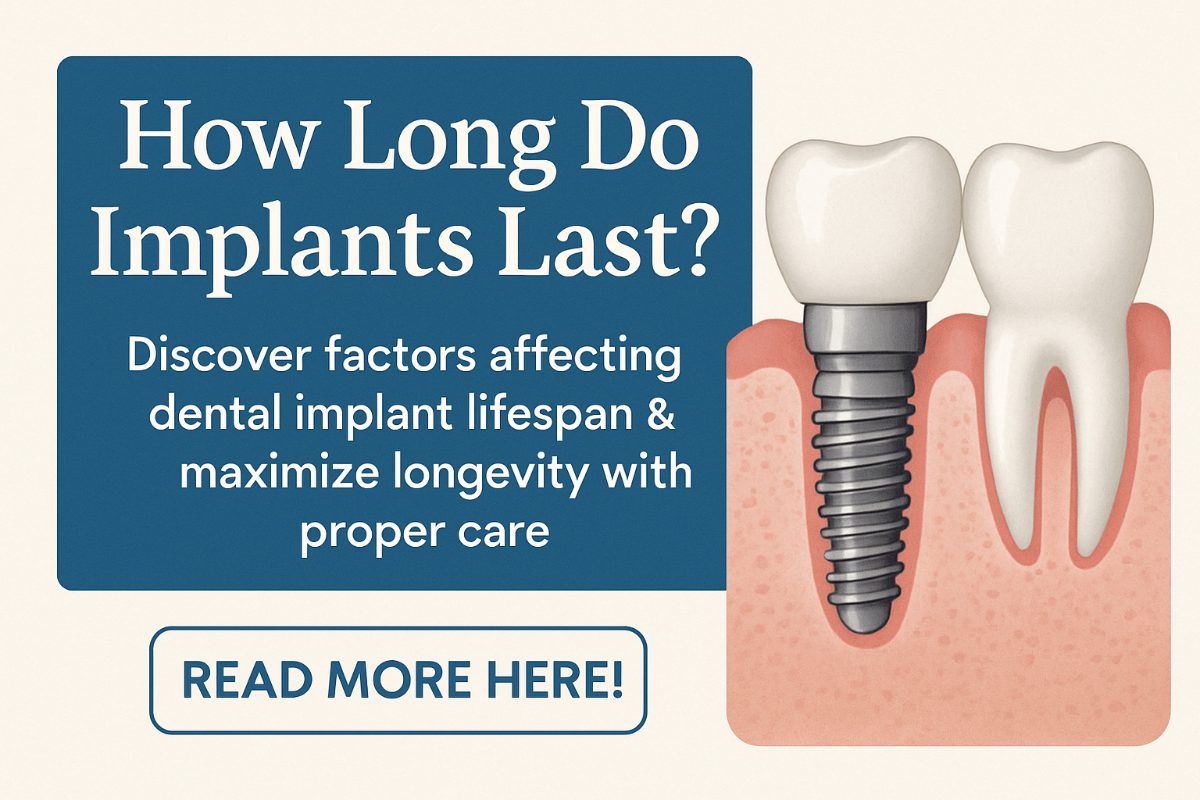
Dental implants are metal posts surgically placed into the jaw to replace missing tooth roots and support crowns, bridges, or full-arch prostheses. If you’re wondering “how long does implants last,” the short, evidence-based answer is: many dental implants last 10–30+ years — and often a lifetime — when placed and cared for properly. In this article you’ll learn what an implant is, what affects its lifespan, how to care for implants, warning signs of trouble, and when repair or replacement may be needed.
What Is a Dental Implant?
A dental implant has three main parts: the implant (a titanium or titanium-alloy screw placed into bone), the abutment (a connector), and the crown (the visible tooth replacement). The implant replaces the tooth root and bonds with the jawbone through a process called osseointegration. Together these parts restore chewing, speech, and the look of a natural tooth.
Typical Lifespan: Realistic Expectations
Real-world outcomes show many implants remain stable and functional for decades. Typical estimates put most implants lasting at least 10–15 years, with many lasting 20–30 years or longer. Long-term studies report high survival rates (often above 90% at 10 years) when implants are correctly planned, placed, and maintained. “Success” means the implant is stable, pain-free, free of infection, and supports a functional prosthesis.
Key Factors That Determine How Long Implants Last
Oral hygiene and home care
Daily brushing, flossing, and cleaning between teeth and implants are critical. Plaque buildup can lead to inflammation around the implant (peri-implant mucositis) and progress to infection in the bone (peri-implantitis), which shortens implant life. Patients who clean well have far better long-term results.
Smoking, alcohol, and overall health
Smoking impairs healing and raises infection risk, lowering implant survival. Poorly controlled diabetes and some other medical conditions also reduce success rates. Tell your clinician about medications and health issues so risks can be managed before and after implant placement.
Bone quality and jaw anatomy
Good bone volume and density help implants integrate and stay stable. If bone has deteriorated from long-term tooth loss, bone grafting or sinus lifts may be needed. Successful grafting improves long-term outcomes but can affect overall treatment time.
Prosthetic design and materials
A single implant crown, an implant-supported bridge, and a full-arch prosthesis (like All-on-4) place different forces on implants. Materials (porcelain, zirconia, acrylic) wear differently. A well-designed prosthesis that evenly distributes bite forces and uses durable materials will last longer.
Skill and experience of the clinician
Careful planning, precise placement, and proper follow-up are major factors in success. Experience with implant surgery, digital planning, and restorative techniques reduces complications and improves longevity.
How To Maximize Implant Longevity
Keep regular hygiene: brush twice daily with a soft brush, floss or use interdental brushes around implants, and use an antibacterial rinse if advised. Schedule professional cleanings and exams every 3–6 months as recommended. If you grind your teeth, a night guard reduces damaging forces. Stop smoking, manage systemic health (like diabetes), and follow your dentist’s maintenance plan. Attend follow-up visits so small issues can be fixed before they become failures.
Common Problems and Warning Signs
Watch for redness, swelling, bleeding around the implant, persistent bad taste or odor, pain, or any loosening of the crown or implant. Peri-implantitis (infection of bone around the implant) can cause bone loss and loosening. Early signs often start as tender or inflamed gums. If you notice changes, call your dentist promptly — early treatment is most successful.
When Implants Need Repair or Replacement
Sometimes only the crown or abutment needs repair or replacement due to wear, fracture, or loosening. If infection reaches the implant bone, treatment may include cleaning, antibiotics, and bone regeneration. In severe cases an implant may fail and require removal, grafting, and placement of a new implant after healing. Timelines vary: minor repairs can be same-day or weeks; full replacement can take several months from removal to re-implantation and final restoration.
How Modern Technology Improves Implant Success
CT scanners and 3D imaging let dentists plan implant position accurately to avoid nerves and optimize bone support. Digital case planning and intraoral scanners create precise restorations and reduce lab time. Soft-tissue lasers aid in gentler gum work and faster healing. Sedation options (conscious or IV) improve patient comfort and allow quicker, calmer procedures. These technologies lower complication rates and help implants last longer.
FAQ — Quick Answers
Q: how long does implants last? A: Many implants last 10–30+ years; with excellent care some last a lifetime. Q: Do implants need special care? A: Yes — daily cleaning, regular dental checkups, and professional maintenance are essential. Q: Can implants fail after many years? A: Yes — infection, trauma, or systemic health changes can cause late failures, but early detection and treatment improve outcomes.
About Dr. Eric M. George and Our Practice
Dr. Eric M. George, DMD, DABOI, DICOI, MAGD, FAAID, FMIII, FAADS, FICD, is a board-certified implant surgeon and general dentist with advanced Diplomate and Mastership credentials. He combines evidence-based care with advanced technology to plan and place implants safely. Our practice uses CT scanners, digital planning, soft-tissue lasers, intraoral scanners, sedation options, and a 24-hour call system to support successful long-term results.
Next Steps / Call to Action
If you’re considering implants or want to know how long your implants may last, book a consultation. Bring any dental records, recent X-rays or CT scans, and a list of current medications and health conditions. During your visit we’ll review your medical history, examine your mouth, and create a personalized plan to maximize implant longevity. Schedule an implant evaluation to get a clear, customized longevity plan and next steps.