

Thinking, “Is it finally time to get dental implants?” This guide is for anyone frustrated with loose teeth, loose dentures, pain, or trouble chewing. Read on to learn how dental implants work, signs you need treatment, options (including full mouth dental implants), what to expect, and practical next steps for dental implants in Coventry, RI.
How dental implants work
Parts of a dental implant
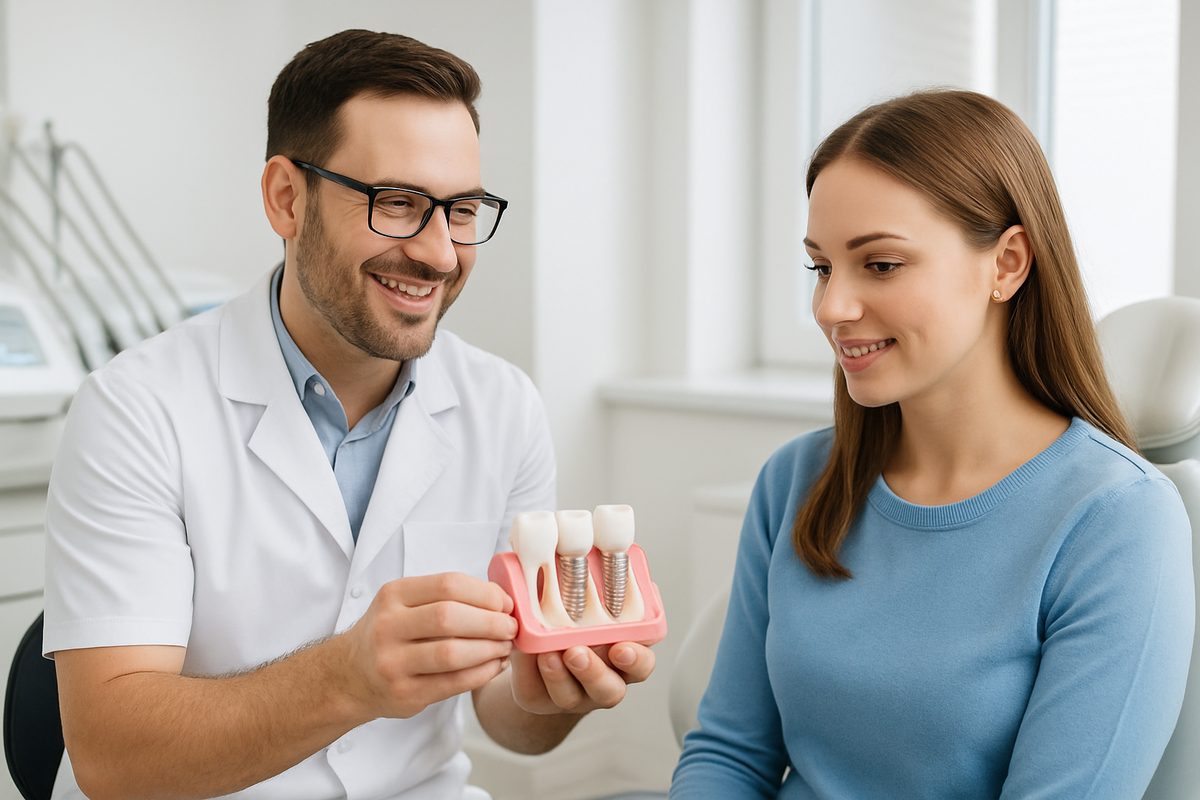
A dental implant is a three-part system:
- Implant: a titanium post placed into the jaw that acts like a tooth root.
- Abutment: a connector that links the implant to the visible tooth.
- Crown: the tooth-shaped restoration that looks and functions like a natural tooth.
Together they replace a missing tooth without relying on nearby teeth. For full-arch cases, several implants support a bridge or denture.
Dental implants in Coventry, RI: the typical timeline
Every case is different, but a common timeline looks like this:
- Consult and imaging: exam and 3D CT scan to plan placement.
- Preparatory work: extractions or bone grafts if needed (healing 2–6 months for grafts).
- Implant placement: surgery to place the posts (often 1–2 hours per arch).
- Healing (osseointegration): implants bond to bone—usually 3–6 months for staged cases.
- Final restoration: abutments and crowns or a fixed full-arch prosthesis are attached.
Some patients qualify for immediate restorations (“same-day” teeth) depending on bone and implant stability. Your dentist in Coventry, RI will explain if immediate loading is safe for you.
Signs it’s time to consider dental implants
Common symptoms and quality-of-life issues
Consider dental implants in Coventry, RI if you have:
- Trouble chewing or avoiding favorite foods
- Speech changes or slipping dentures
- Shifting or loosening teeth
- Visible bone loss or shrinking jaw
- Chronic pain, infection, or repeated dental work
These problems affect nutrition, confidence, and overall health—implants often restore function and comfort.
When to consider full mouth dental implants
Full mouth dental implants are an option for people with many failing teeth, long-term denture wear, or severe jawbone changes. Candidates typically want a permanent, fixed solution and are in good overall health or can be optimized medically. Your implant team will assess bone, medical history, and goals to recommend a full-arch plan like All‑on‑4 or All‑on‑X when appropriate.
Treatment options and how to choose
Single tooth vs. multiple vs. full mouth dental implants in Coventry, RI
Options include:
- Implant crown: replaces one missing tooth without altering adjacent teeth.
- Implant-supported bridge: replaces several teeth in a row using fewer implants.
- Full-arch solutions: fixed bridges or implant-retained dentures (All‑on‑4/All‑on‑X) for most or all teeth.
Your choice depends on how many teeth are missing, bone quality, budget, and whether you want a removable or fixed solution.
What affects cost and timeline
- Need for bone grafting or sinus lifts
- Extractions and infection control
- Number of implants and type of prosthesis
- Materials (zirconia vs. porcelain) and lab work
- Use of advanced imaging or guided surgery
Discuss fees and timelines up front—many Coventry, RI practices provide clear treatment plans and payment options.
What to expect during the process
The consultation and advanced planning
Planning begins with a 3D CT scan and digital scans. Digital treatment planning lets your surgeon place implants precisely on a computer model. This reduces surprises, shortens surgery time, and improves outcomes. Pain-free digital impressions eliminate messy putty and speed lab work for faster restorations.
Sedation options, surgery day, and recovery in Coventry, RI
Sedation choices include conscious sedation (you’re relaxed but awake) and IV sedation (you sleep through the procedure). Soft-tissue lasers may be used to reduce bleeding and speed healing. Expect minor swelling and soreness for a few days, a soft-food diet initially, and follow-up visits over several months to monitor healing and fit.
Risks, benefits, and long-term care
Success rates and likely outcomes
Dental implants have high success rates—often above 90–95% with proper care. Benefits include restored chewing, preserved bone, improved speech and appearance, and long-term stability. Realistic expectations: implants are durable but require time, planning, and good oral hygiene.
Maintenance and how to keep implants healthy
- Brush twice daily and floss or use interdental brushes around implants
- Keep regular dental visits and cleanings every 3–6 months as recommended
- Watch for looseness, pain, swelling, or bleeding and call the office right away
With routine care, implants can last decades.
Why choose Dr. Eric M. George for dental implants in Coventry, RI
Dr. Eric M. George is a Coventry, RI–born, board-certified implant surgeon with rare Diplomates in both the American Board of Oral Implantology and the International Congress of Oral Implantology, plus a Mastership in the Academy of General Dentistry. His training and awards mean patients receive evidence-based, high-quality care.
The practice uses advanced tools that improve comfort and outcomes: CT scanners for 3D planning, soft-tissue lasers, conscious and IV sedation options, digital scanners, and a 24-hour call system for real-person support. These technologies help deliver predictable results and fewer visits for dental implants in Coventry, RI.
Ready to learn if dental implants in Coventry, RI are right for you? Call to request a consult or same-day appointment and start with a 3D evaluation and clear treatment plan.