

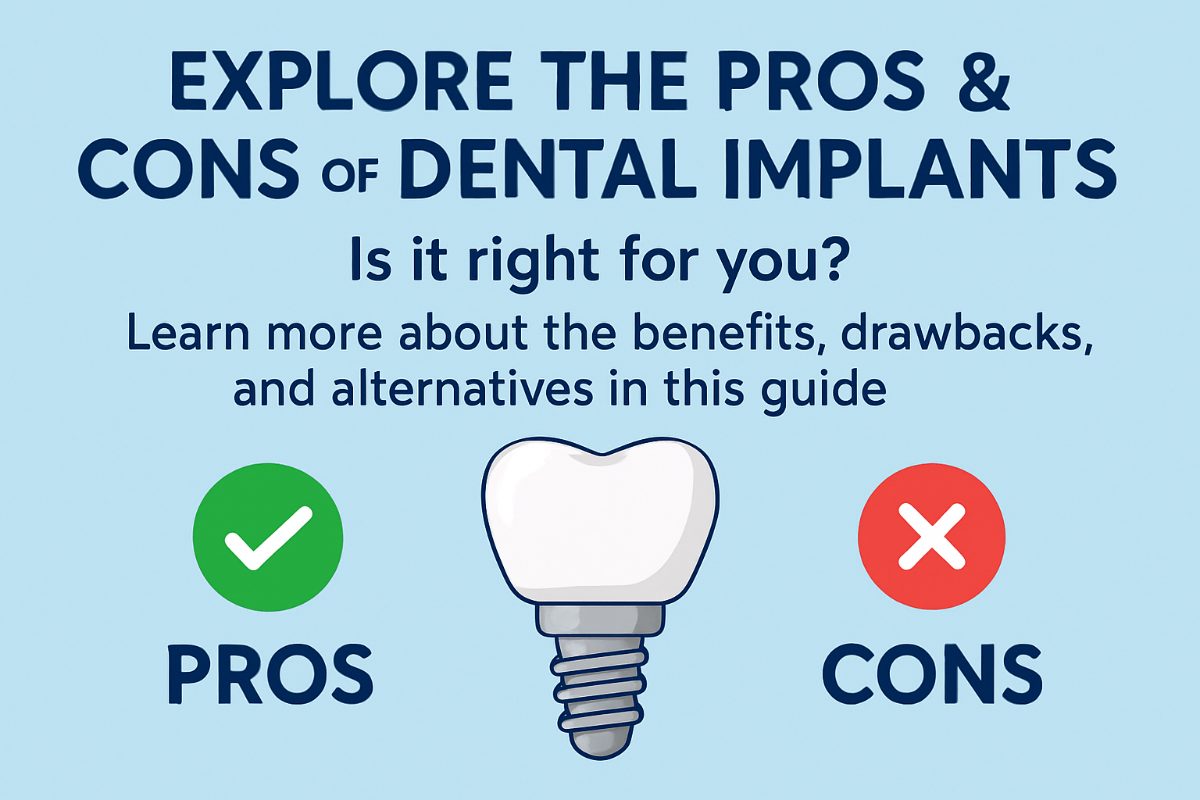
Dental implants are a common way to replace missing teeth. This short guide covers the pros cons dental implants so you can quickly see the main benefits and drawbacks. In about 500 words you’ll get a clear overview of how implants work, the reasons people choose them, the downsides to consider, who makes a good candidate, quick alternatives, smart questions to ask, and a brief note about Dr. Eric M. George’s experience to help you decide.
How Dental Implants Work — A Quick Overview
Dental implants are made of three parts: the titanium implant that acts like a tooth root, an abutment that connects the implant to the visible part, and the crown that looks like a tooth. After an initial consultation and imaging, the implant is placed in the jaw. Healing and integration usually take several months before the final crown is attached. Implants replace lost roots and provide a stable base for chewing and speaking.
Main Benefits (Pros) Of Dental Implants
Natural look, feel, and function
Implants act and feel like real teeth. They restore full chewing power, help clear speech, and often boost confidence because crowns match the shape and color of natural teeth.
Longevity and cost-per-year value
With good care and regular checkups, many implants last decades. While the upfront cost can be high, the long lifespan often makes implants a better value over time compared with repeated repairs or replacement of bridges or dentures.
Protects jawbone and adjacent teeth
Implants stimulate the jawbone like a natural root, which helps prevent bone loss after tooth loss. Unlike a traditional bridge, implants don’t rely on adjacent teeth for support, so nearby teeth are left intact.
Common Drawbacks (Cons) Of Dental Implants
Surgical procedure and healing time
Implant placement is a minor surgery. Patients can expect some swelling, soreness, and several months of healing for the implant to fuse with bone. Recovery is gradual and may include multiple visits.
Upfront cost and potential added treatments
The initial cost is higher than dentures or bridges. Some patients need bone grafts or sinus lifts to create enough bone for an implant, which raises cost and lengthens treatment time.
Risks and possible complications
Complications include infection, nerve irritation, or implant failure. Risks are lower for healthy patients and experienced surgeons, and careful planning and hygiene reduce problems.
Who Is A Good Candidate?
Good candidates are in overall good health, have healthy gums, sufficient jawbone, and realistic expectations. Smoking, uncontrolled diabetes, or poor oral hygiene can raise risk. Age alone is usually not a barrier if healing ability is good.
Alternatives To Implants — Quick Comparison
Fixed bridges replace missing teeth without surgery but may weaken nearby teeth. Removable dentures cost less but can be less stable and affect eating and speech. Implant-supported dentures offer better stability than regular dentures but can cost more.
Questions To Ask During Your Consultation
Ask about the doctor’s implant experience and success rates, whether you’ll need grafting, what imaging (CT/3D) they use, sedation options, the expected timeline, and financing or payment plans.
About Dr. Eric M. George — Expertise & Advanced Care
Dr. Eric M. George, DMD, DABOI, DICOI, MAGD, FAAID, FMIII, FAADS, FICD, is a board-certified implant surgeon and general dentist with advanced credentials and years of implant experience. He combines evidence-based care with a patient-focused approach to improve outcomes.
Advanced technology and patient comfort
His practice uses CT 3D imaging, digital treatment planning, digital scanners, soft-tissue lasers, and offers conscious and IV sedation. A 24-hour call system supports patients after treatment.
Next Steps & Simple CTA
If you’re considering implants, schedule a consultation, bring medical and dental history, and ask about financing if cost is a concern. A short visit can determine whether implants are the right choice for you.