

If you are missing one tooth, a single dental implant is often the best long-term solution. This post explains what a single dental implant is, who might benefit, and what to expect from consultation to final crown. You’ll learn the main parts of an implant, the top benefits, candidacy requirements, the treatment steps, common risks, cost basics, how to choose a provider, and simple aftercare tips to help your implant last.
What Is a Single Dental Implant?
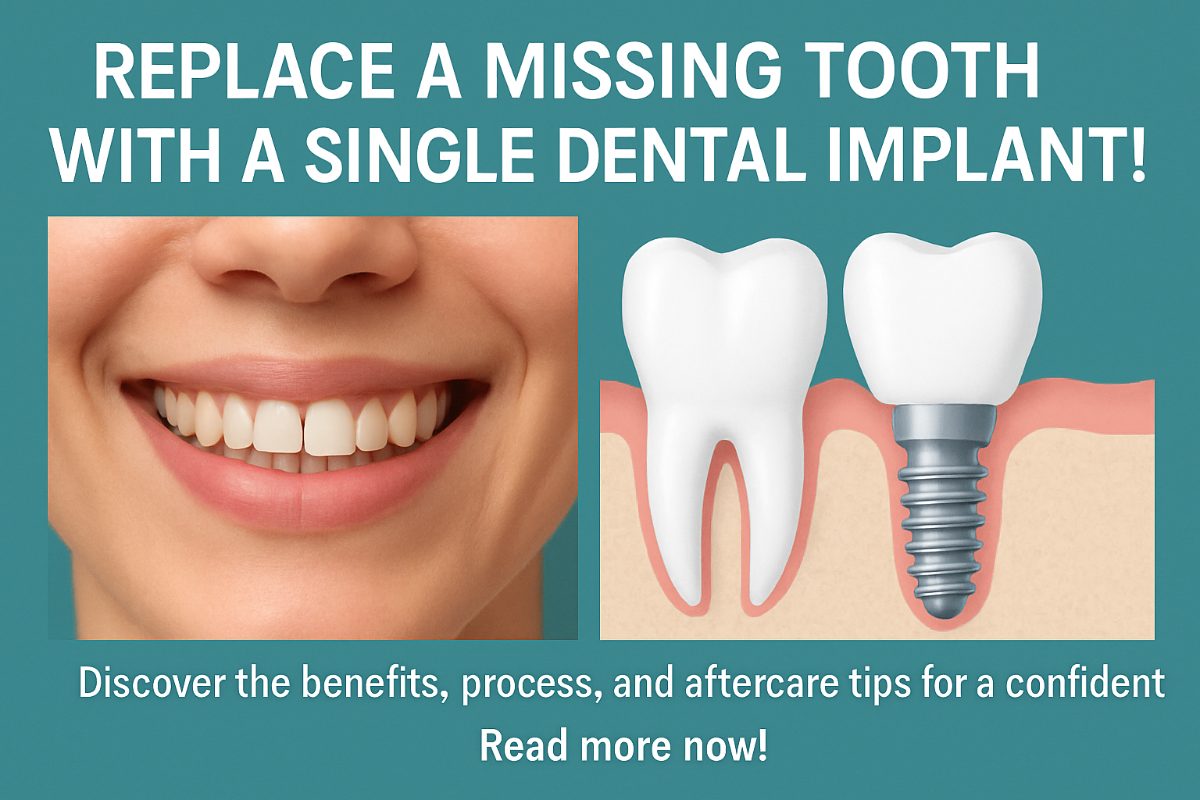
A single dental implant replaces one missing tooth. It has three parts: the titanium implant that sits in the jawbone, an abutment that connects the implant to the visible tooth, and the crown that looks like a natural tooth. Unlike a bridge, an implant does not need adjacent teeth to be altered. Unlike removable dentures, it is fixed and feels more like a real tooth.
Top Benefits of a Single Dental Implant
Long-term function and durability
A single dental implant can last many years, often decades, with good care. The implant fuses to bone (osseointegration), giving strong chewing power similar to a natural tooth.
Bone preservation and oral health
Implants stimulate the jawbone and help prevent bone loss that happens when a tooth is missing. Keeping bone volume preserves facial shape and supports nearby teeth.
Appearance and confidence
The crown is custom made to match your teeth. A single dental implant looks natural and can restore your smile and confidence without the movement of a denture.
Who Is a Good Candidate for a Single Dental Implant?
Oral health and gum status
Healthy gums and good oral hygiene are important. Active gum disease should be treated before implant placement to reduce risk of failure.
Bone quality and when grafting is needed
Enough jawbone is needed to support the implant. If bone is thin or lost, a bone graft can rebuild the site so an implant will be stable.
Medical factors and lifestyle considerations (smoking, chronic conditions)
Smoking, uncontrolled diabetes, and certain medical conditions can raise risks and slow healing. Your dentist will review your health and may recommend steps to improve success chances.
What to Expect During the Single Dental Implant Process
Consultation and advanced digital planning (CT scans, digital scanners)
Expect a full exam, X-rays, and often a CT scan for 3D planning. Digital scans help design the implant position and final crown before surgery.
Surgical placement and sedation options
The implant is placed surgically under local or conscious sedation; IV sedation is an option for anxious patients. The procedure is usually outpatient and comfortable with modern techniques.
Healing timeline, follow-ups, and crown placement
Healing takes a few months for the implant to fuse to bone. After healing, an abutment and final crown are placed. You’ll have follow-up visits to monitor progress.
Risks, Complications, and How They’re Managed
Common risks include infection, slow healing, or implant failure. Watch for persistent pain, swelling, or loosening. Modern 3D planning, sterile technique, soft-tissue lasers, and careful follow-up lower complication rates and improve outcomes.
Cost, Insurance, and Financing for a Single Dental Implant
Cost varies by implant brand, need for bone grafts, location of the tooth, and quality of the crown. Some dental insurance may cover part of the crown or surgical fees; many practices offer financing or payment plans to spread costs.
Choosing the Right Provider for Your Single Dental Implant
Ask about training, number of implants placed, use of CT-scans, and sedation options. Consider a clinician with board certifications and advanced implant credentials. Dr. Eric M. George, DMD, DABOI, DICOI, MAGD, FAAID, FMIII, FAADS, FICD holds Diplomate status in implant organizations, uses CT scanning, digital planning, soft-tissue lasers, and offers sedation and 24-hour support—reasons patients choose his care.
Aftercare Tips and How to Maximize Success
Keep the area clean with gentle brushing and salt rinses as advised. Avoid hard or sticky foods while healing. Attend all follow-ups and maintain regular dental cleanings to protect your investment. If you’re considering a single dental implant or have questions, schedule a consultation to review your options and get a personalized treatment plan.