

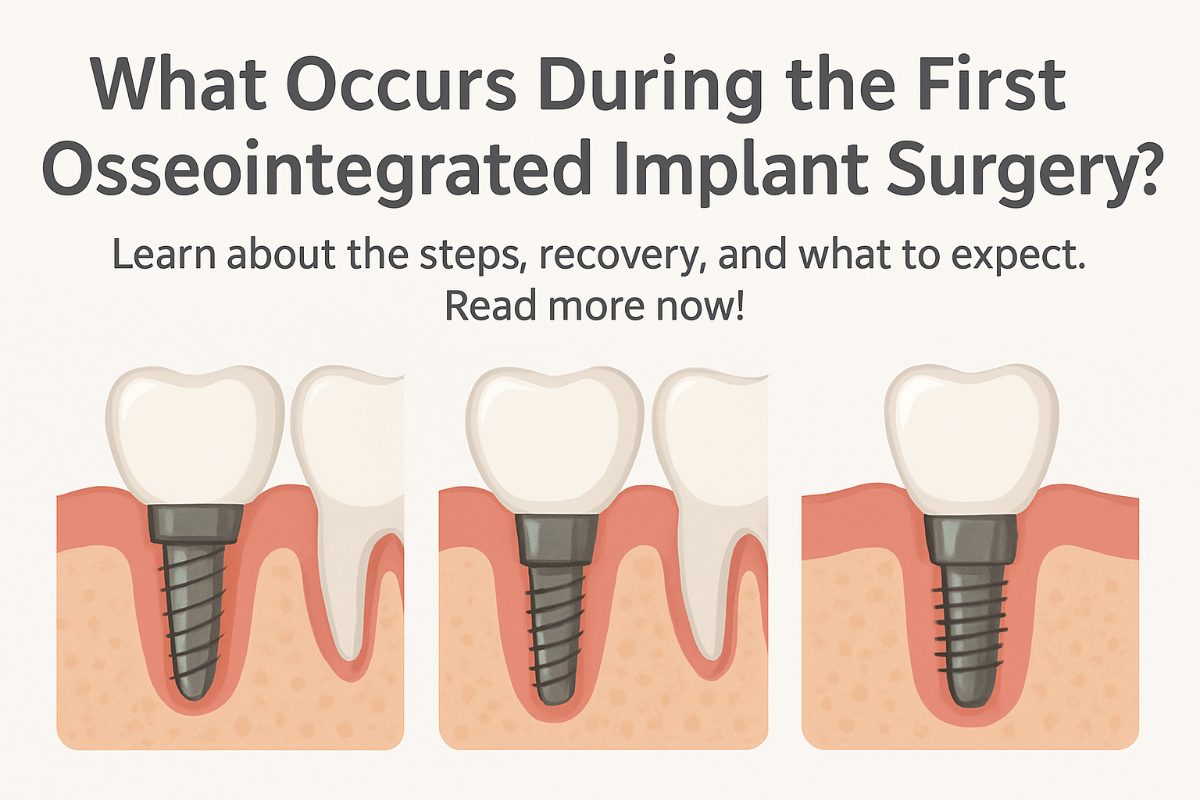
Many patients ask, “what occurs during the first surgery of an osseointegrated implant?” This article answers that question simply and clearly. You’ll learn the steps you’ll go through, how long each part takes, what to expect right after, and the basic recovery timeline. By the end you should feel prepared for the first surgery and know the common signs to watch for as the implant bonds with your bone.
Quick Overview: What Is an Osseointegrated Implant?
Osseointegration means the dental implant becomes firmly attached to your jawbone. The first surgery places a titanium implant into the bone and sets the stage for that bonding. That initial stage creates stability and a healthy environment so the final crown or denture can be attached later and last for years.
Before Surgery: Evaluation and Planning
3D imaging and digital planning
Most practices use CT scans and digital planning software to map your jaw. This helps choose the right implant size and position, avoid nerves and sinuses, and plan a safer, faster surgery.
Medical review and consent
You’ll review health history, current medicines, and any allergies. Pre-op instructions may include fasting for sedation, stopping certain meds, or a short antibiotic course if needed. You’ll sign consent after questions are answered.
What Occurs During The First Surgery Of An Osseointegrated Implant
Below is a simple step-by-step of what happens from arrival to leaving.
Anesthesia and sedation
Options include local anesthesia (numb area), conscious oral or IV sedation (relaxed but breathing on your own), or deeper IV sedation (asleep). You should feel little to no pain; you may be drowsy afterward if sedated.
Incision and access
The dentist makes a small opening in the gum to reach the bone. Some cases use a flapless or laser approach for smaller openings and less bleeding. Precision is important to protect nearby structures and reduce healing time.
Drilling and implant placement
A series of gentle drills creates a precise hole in the jawbone. The implant is then placed and tightened to achieve initial stability. This part is usually quick—often 20–40 minutes depending on complexity.
Bone grafting and additional steps (if needed)
If bone is thin or a tooth was recently removed, the surgeon may add bone graft material or a membrane. This can extend surgery time and may require a bit more healing before final restoration.
Suturing and protective cap
The gum is closed with stitches or left around a healing cap. A cover screw or healing abutment protects the implant while bone grows around it.
Immediate Post-Op Care: First 24–72 Hours
Expect mild to moderate swelling and soreness. Use ice packs, take prescribed or over-the-counter pain meds, and eat soft foods. Avoid smoking and heavy exercise. Seek care for heavy bleeding, severe pain, fever, or numbness that doesn’t improve.
Healing Phase: Osseointegration and Follow-Up
Bone bonding takes weeks to months. You’ll return for short checks to confirm healing. Once stable, the surgeon uncovers the implant (if covered) and places an abutment and then the final crown or denture.
Risks, Comfort Measures, and How Technology Lowers Risk
Common risks include infection, sinus or nerve irritation, or implant failure. CT imaging, digital planning, soft-tissue lasers, and experienced sedation reduce these risks and improve comfort and outcomes.
How To Prepare and Questions To Ask Before Surgery
Plan a ride home if sedated, arrange soft foods, and follow medication instructions. Ask about timeline, sedation options, emergency contact, costs, and post-op support.
About Dr. Eric M. George and Our Advanced Implant Care
Dr. Eric M. George, DMD, DABOI, DICOI, MAGD, FAAID, FMIII, FAADS, FICD, is a board-certified implant surgeon and general dentist with international credentials and teaching experience. Our office uses CT scanners, digital treatment planning, soft-tissue lasers, digital scanners, sedation options, and a 24-hour call system to support safe, predictable care.
Next Steps / Call To Action
If you want a personalized answer to “what occurs during the first surgery of an osseointegrated implant,” schedule a consult to review your CT scan, treatment plan, sedation choice, and timeline. We’ll explain each step and help you feel ready.